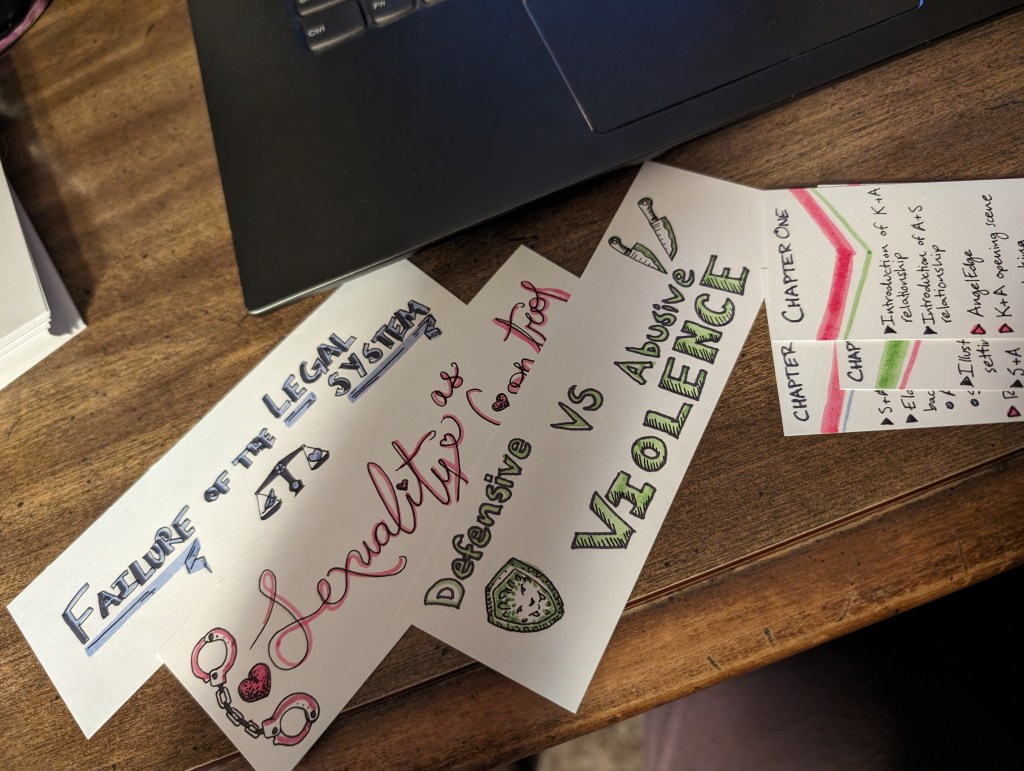
I’ve never edited a long piece of writing before. By long, I mean novel length. I can easily churn out a polished 20-page research paper, a 10-page short story, flash fiction, all these smaller pieces have less space in which to pack overarching themes and character information. Every word in my smaller pieces is mindfully chosen, in short fiction (edited short fiction, I should say), my main concern is word economy: how much meaning is in this sentence? If there isn’t enough, it’s cut. There’s a need to convey information concisely and accurately, and that’s perfectly manageable when your finished product is 10,000 words.
Long form fiction, on the other hand, is a whole different animal. I find myself changing intents from the start of the book to the end. The overarching themes have to be traced in satisfying ways, there has to be an ending that makes sense based on the consequences of every action made up until that point. I have read the first 18 chapters of my “practice novel” three times each at least, and I am still not even close to printing the first draft so I can mark it up.
What works for short fiction and nonfiction does not operate the same for long-form fiction. I shudder at the thought of what this means for long-form non-fiction — one of my favorite genres to read, and one I now have much more respect for. It’s so easy, when you have 50,000 + words, to add things that aren’t directly relevant to the plot. You get yourself bogged down in the moving pieces until you have gears turning in places that don’t connect to the main plot. This novel is a machine I am only just learning the inner workings of.
It doesn’t help that, right now, I am only looking at the chapters individually. I haven’t even tackled the pacing of the whole project. I fully expect the finished version of Manticore to look staggeringly different than the first, second, third drafts thereof. My hope is that, after undergoing this process blind once, I will be able to accelerate future novels to the point of “good enough” faster. After all, is learning an art form not simply practice? Iteration and iteration and iteration, layers of paint until you see the trees emerging from the forest.
If I can accomplish this single stand alone novel to my own high standards or narrative intricacy, that’s an excellent sign for the other multi-novel interlocking projects I have in mind down the road. That’s GREAT news for the three manuscripts collecting dust in my files. It’s even better news for the books not yet written, the series I’d like to try my hand at later down the line. What a process.


Leave a Reply