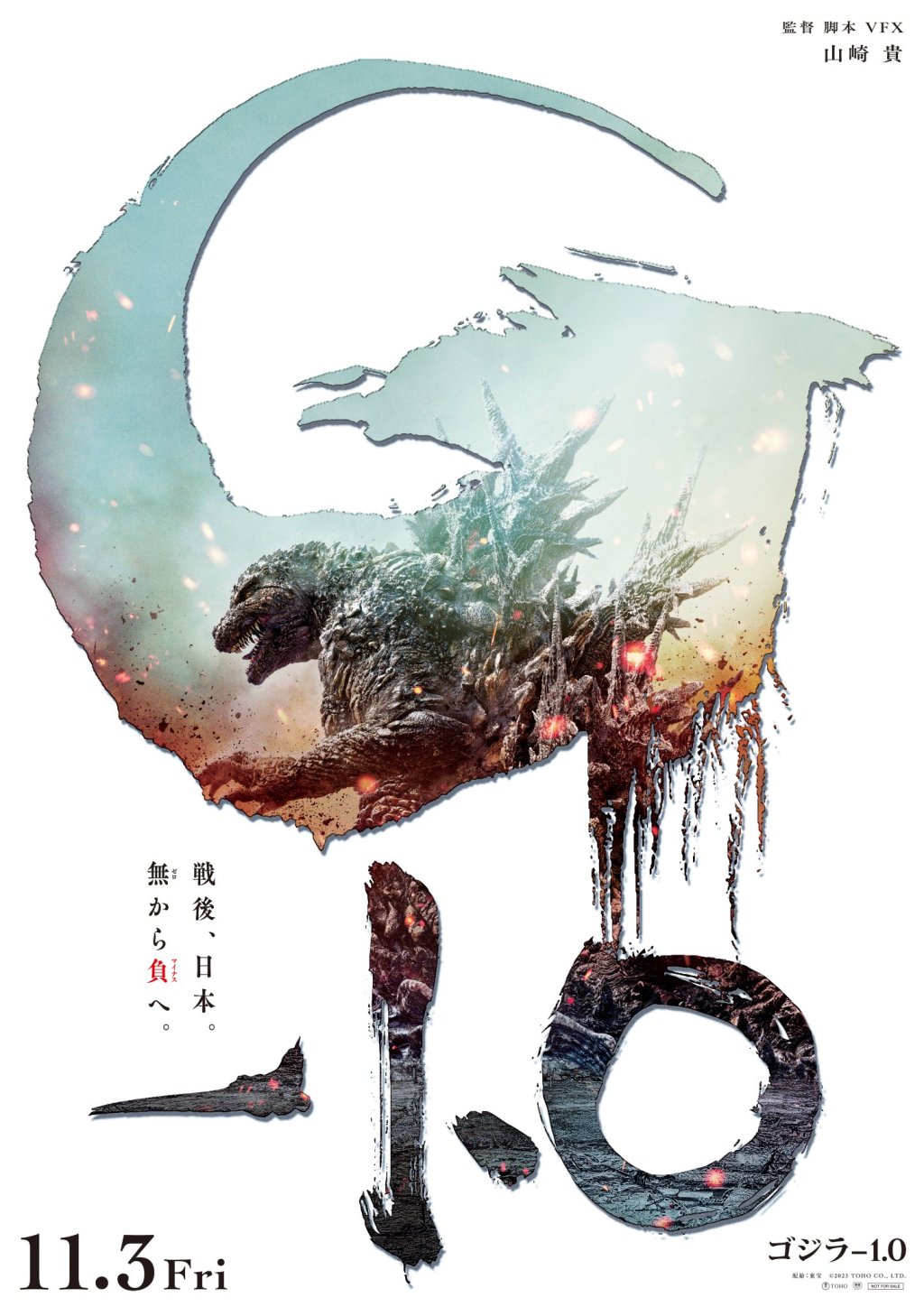
It should come as a surprise to no one that I love Godzilla, and though my knowledge of the franchise is slimmer than that of your average superfan I still ran to the theaters as soon as I realized that a new Japanese rendition of Godzilla was out. I was late to the punch — I use adblockers wherever possible and don’t have cable, so I only learned about Godzilla Minus One when I almost spoiled the climax for myself while scrolling on social media. Two days later, I was wrangling the troops and getting us in the car for a blind movie night. One of my friends had heard good things, my partner hadn’t heard of it at all. That was, by far, the best way to go into this movie.
When it comes to giant monsters, the thing I’m stuck on is how the movie explores the biology of something so large. I was spoiled for this in Shin Godzilla with the multiple developmental stages from the pseudo-fish with bleeding gills to the split jaw and discussion of its metabolism, not to mention the DRAMA of the heat ray charging up and the terrifying implication of mini-Godzillas. There’s very little of this in Godzilla Minus One, returning to a classic design with a friendlier face and less exploration of the natural lifestyle of Godzilla, what it eats, how it functions, etc.. Instead, they did something I didn’t expect and set the big G in the most gut-punching historical context. Some spoilers ahead, so keep that in mind if you’ve yet to see the movie for yourself (go see the movie for yourself).
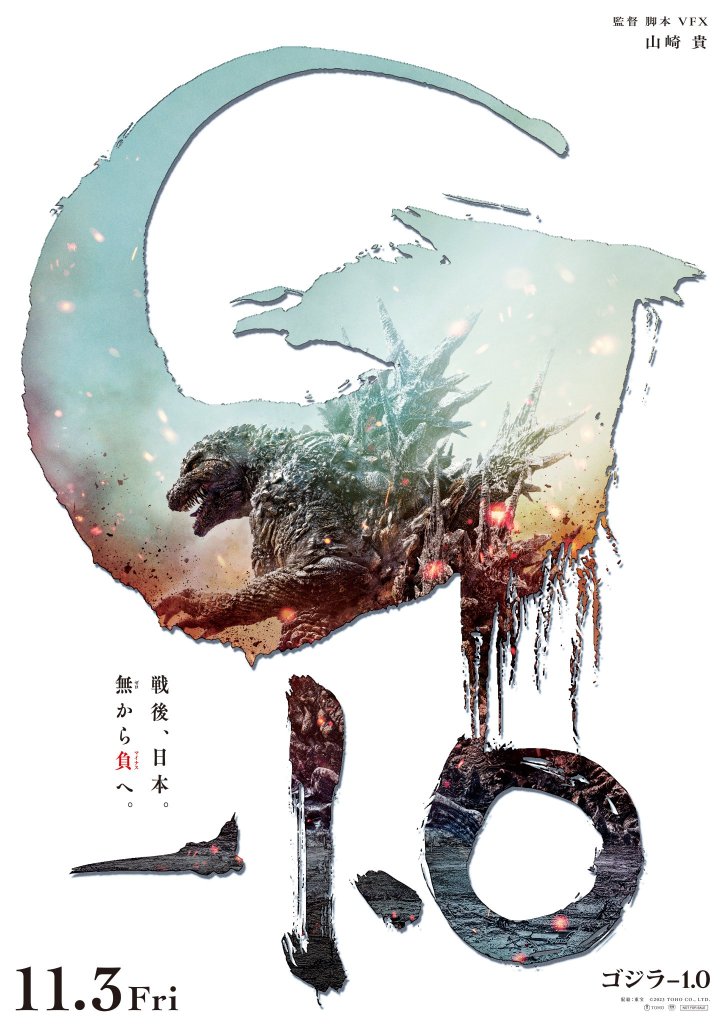
Godzilla originated in WWII, a metaphor for the complicated relationship Japan has with atomic destruction. This movie, fittingly, is set in the years directly following WWII and the main characters are people trying to pick up the pieces after a literal rain of fire decimated their homes and fractured their families. In fact, the beginning of the movie sets up Godzilla as the war. On Odo island, the main character lands his plane in avoidance of his flight as a kamikaze pilot, only for a (smaller) Godzilla to come ashore that same night and destroy the mechanic’s outpost. Only two left alive: a technician already jaded by the war, and a kamikaze pilot who failed twice now to die when he was told to.
And so the war ends. People piece their lives back together, the ash washes away from the streets of Tokyo, our kamikaze pilot takes in a woman and a child — neither related, but that never matters — and takes a job cleaning the Japanese shore of mines alongside some other veterans of the war. All goes well, until Godzilla reappears. Enormous, chowing down on military destroyers and rampaging through the streets of Tokyo. The government won’t assist, pressure from the USA forces them to work with disarmed destroyers and civilian forces.
But they do come together, the civilians. They approach the issue with ingenuity, banding together for the scraps of community they wove over the past two years. With an ejection seat, inflatable lifeboats, a fleet of tugboats, and some desperate luck, they sink Godzilla and put an end to the final catastrophic consequence of WWII (for now).


Leave a Reply