


I was ten years old. Tired, with a plate of dinosaur-shaped chicken nuggets on the plate in front of me in a bar after four days of camping in the woods. The TV showed a newscast, an aerial shot of a small boat on the water and a headline:
“Steve Irwin, Crocodile Hunter, Dead at 44”
My parents had to cut lunch short. I wouldn’t eat and I wouldn’t stop crying. The only thing for it was taking me home and putting me to bed. For years afterwards, I couldn’t even watch my favorite show on Animal Planet without bursting into tears.
(My favorite show, of course, was The Crocodile Hunter)
I credit Steve Irwin with fostering my love of animals — of reptiles specifically. His lack of fear and total love for the animals he handled, no matter how dangerous they potentially were to him, inspired me to feel the same. I reached out for pythons with bodies thicker than my head, scooped up toads, saved countless garter snakes from my cat, all with his teachings in mind.
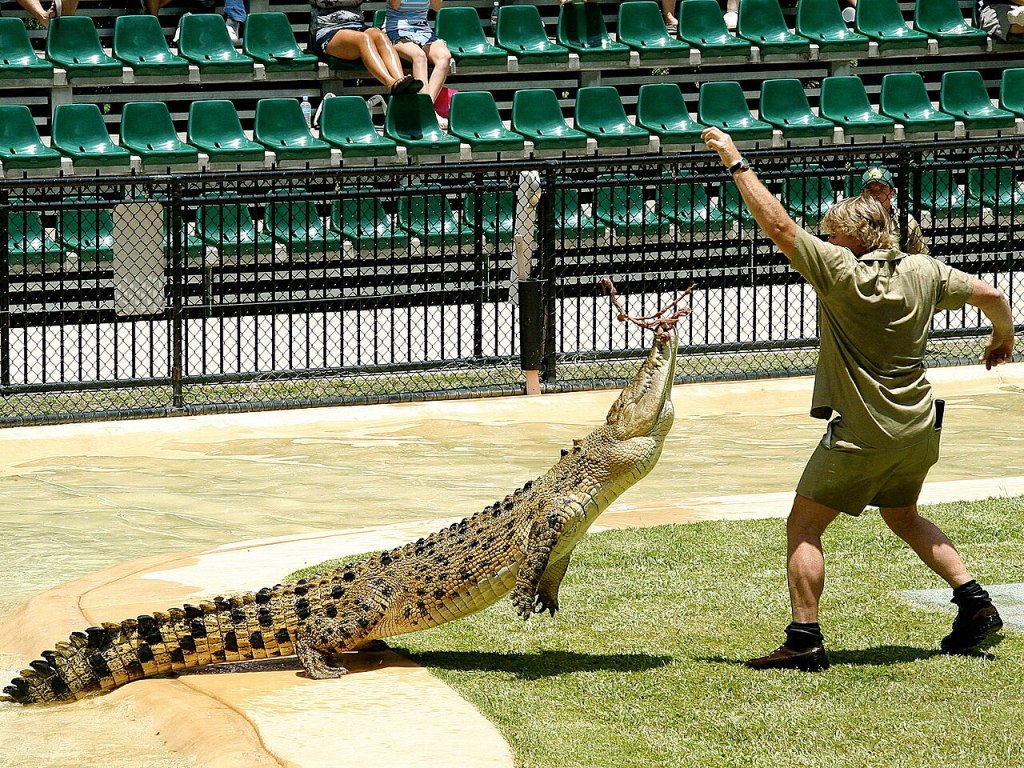
If it weren’t for him, I wouldn’t have been sent to Australia as a child — to date, my only trip abroad — and made a menace of myself catching lizards and identifying the spiders and insects I came across. It was also on that trip when I finally got an idea of the size of the animals Steve was known for handling: saltwater crocodiles. We went to a sanctuary and our guide tied some chicken to a fishing rod. When you looked down, you saw the crocodile: flat, almost pancake-esque as he sunned himself on the concrete, but those yellow eyes flicked upwards. He knew his cue. Our group of schoolchildren stood on the walkway nearly twenty feet above his head, but when the guide dangled the chicken over.
POW straight upwards fifteen feet, head cresting over the guardrail, his jaws snapping shut with a force that shatters bone.
Awe is the right word for that experience, I think.
I couldn’t help but think of Steve while I was out there, interacting with the same animals that fostered his own love of nature and wildlife. I never felt as though I was in danger from these creatures — not even the massive spiders I caught sight of every so often. When we weren’t doing something animal-oriented, I would inevitably become distracted by some creature that wandered into view. To date, I don’t remember much about what we did in the cities. I was too busy catching lizards and watching the spiders walk themselves down the street.
As an adult, I hope I can live up to his example in science communication. North America has its own wealth of fascinating animals threatened by the misunderstandings of the people they live in proximity to. From the mammalian, to the reptilian, to the arthropod, I hope I can be a voice for their value on the landscape and in my own home.


Leave a comment