

Every weird kid I’ve ever known selects one worldwide disaster and gets way too into it. I am, unfortunately, the weird kid who never grew out of the practice. I started with the Black Plague, then moved on to the geography of syphilis, then meandered around in the world of parasites and prions and smallpox for a bit, until about 2018 when I discovered and subsequently began the usual passionate research into the 1918 flu pandemic.
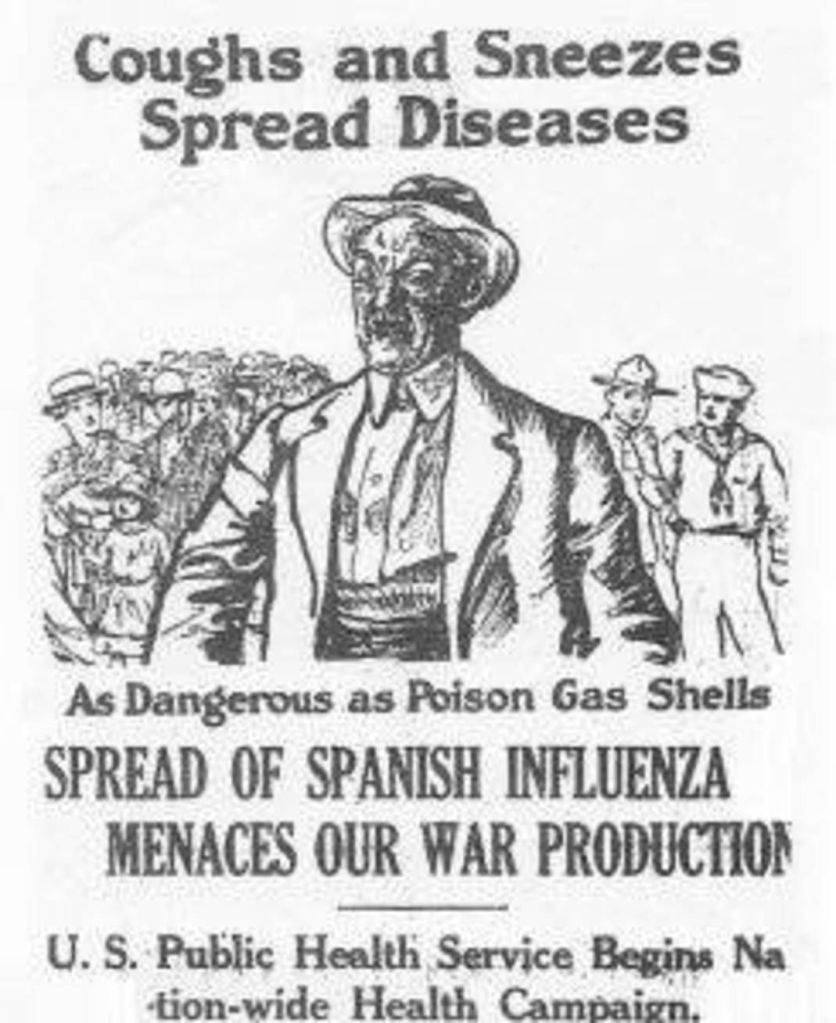
If you’re unaware — likely caught up in the current pandemic on the wind-down — the 1918 flu pandemic, or the Spanish flu, is the last pandemic we’ve had comparable to Covid-19. The nice thing about this pandemic happening in 1918 is that we’ve got a great deal of surviving media from the time, documenting the myriad responses of individuals and groups to the spread of the disease, and what emerges is a picture not unlike what we all lived through in the modern day.
Gunnison, Colorado reported few cases of the flu because of the stringent lockdown procedures they put in place and strictly enforced. In 1918, you got to Gunnison by rail, and they locked down the train cars. They barricaded the highway on either side and stationed guards. Traveling into Gunnison county, you either moved on through, or you moved into quarantine. They banned large social gatherings, shuttering churches, schools, and public parks. When someone did come down with the flu, they were quarantined with the whole family until everyone in the house recovered, then all their belongings and the house itself was fumigated with clothes, childrens’ toys, and memorabilia still tucked inside. By 1919, they lifted the quarantine with record low numbers of deaths attributed to the virus.
Imagine a world where you had to quarantine without the comforting glow of your smart phone blaring information and misinformation at all hours of the day. Where, rather than sit at your computer, you were forced to sit and read. Or to knit. Or pass the time in some other primitive fashion. And what of the essential workers? It’s not like life came to a screeching halt — there was a war on, after all.
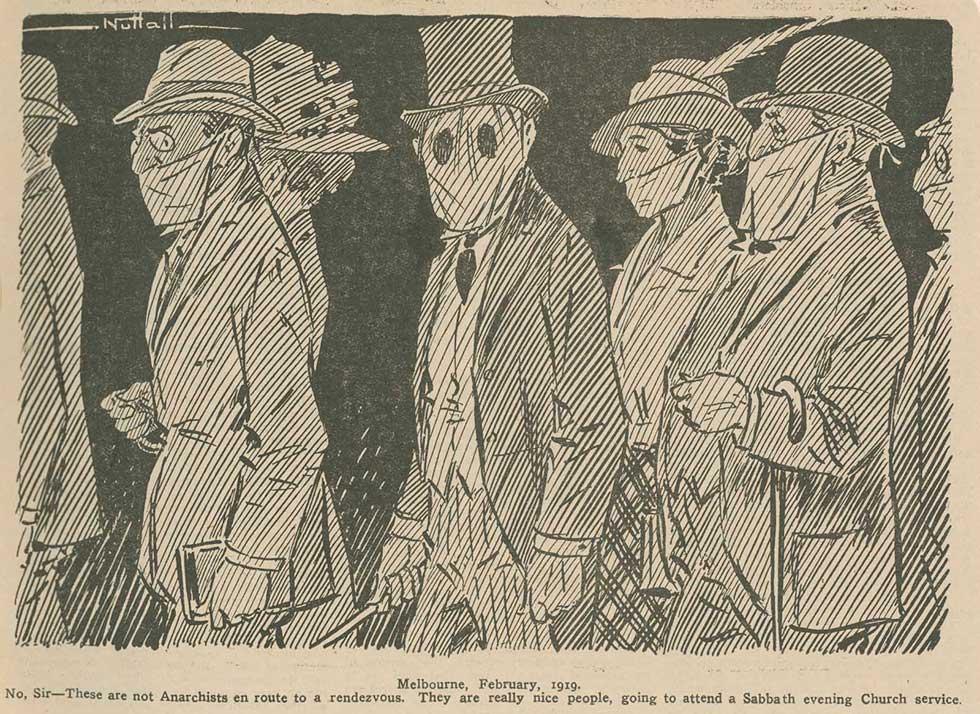
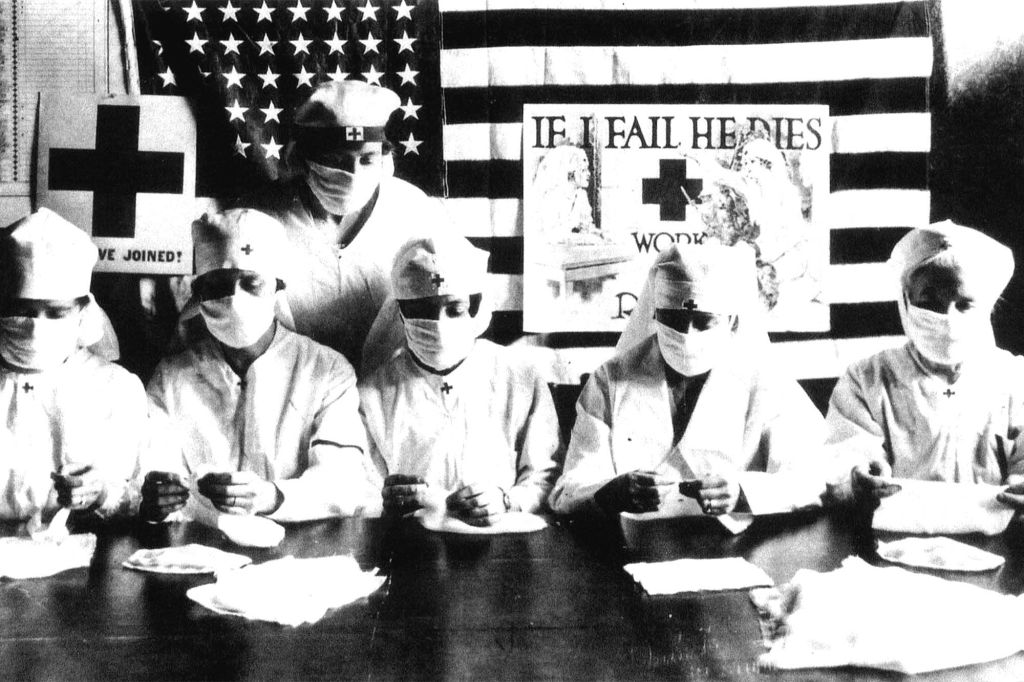
Mask mandates and public health initiatives relied largely on peer pressure. Newspapers posted articles, artists made posters, grannies sewed masks, snake oil peddlers peddled away disguising their advertisements as health PSAs. Based on the media, everyone seemed on the same page about it, but it’s probably worth taking a closer look.
The time it takes to establish a societal picture of an event varies. During the 9/11 terrorist attacks, the event and aftermath occurred with immediate cause and effect and created an easily understandable story. A sequence of events that could be tracked within days, aligning the public to the resultant “next steps” the government wanted to take and minimizing public dissent. A pandemic does not happen in days, and as a result it takes longer for that consensus about the event to form. When your days in social isolation stretch into endless weeks, each day bending into the next, you might find it difficult to keep track of why you’re doing this in the first place. You lose sight of the inciting event, and subsequent significant events seem pointless or unimportant in your lonely little box. A journal entry by a physician, N. Roy Grist, stationed at Fort Devens at the height of the pandemic, shows off the exhaustion and loneliness perfectly familiar to modern healthcare workers:
It’s more comfortable when one has a friend about. … I want to find some fellow who will not ‘talk shop’ but there ain’t none, no how. We eat it, sleep it, and dream it, to say nothing of breathing it 16 hours a day. I would be very grateful indeed if you would drop me a line or two once in a while, and I promise you that if you ever get into a fix like this, I will do the same for you.
N. Roy Grist, excerpt pulled from Smithsonian Magazine
This daily slog prevents a cohesive narrative from forming until much later down the line, when historians finally take the time to sit down and plot the graphs and compile the media of the plague years. As we emerge on the other side of the Covid-19 pandemic, we’re only just beginning to understand the impact it had on our society overall. Today, I still wear a mask to work. Today, the impacts of long Covid are only just beginning to be understood. Today, we’re still living with the fear it might return and the impacts of social isolation. We have no cohesive narrative for Covid-19 yet, and likely won’t have one for another decade or two as we comb through the ruins and mass graves it left in its wake. All we can do is look to the past, and reconsider our future in light of what we know now.


Leave a comment