This is the intermission from season 1 of Dogstar. If you like the X Files, Twin Peaks, werewolves, and taking a fetish concept entirely too seriously, you might want to–
In 1936, Dr. Richard Ilizoff inherited a problem.
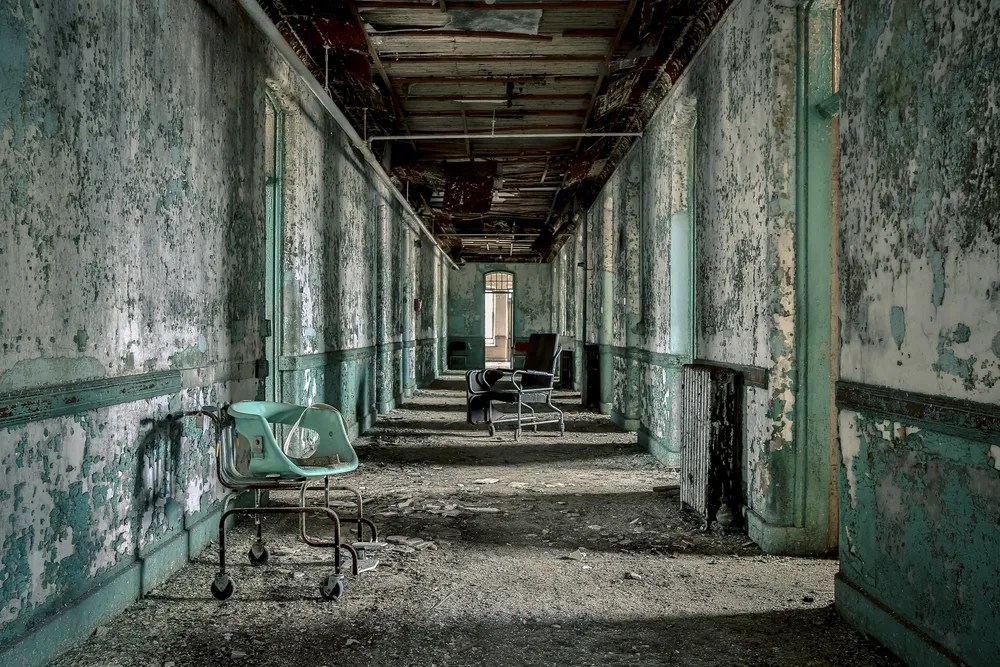
Dr. Ilizoff worked as the primary chemist for the Erdham Institute for the Deranged, a sprawling palatial estate in southeastern Kentucky known to the locals as “Erdie.” Built at the turn of the 20th century, the facility boasted three massive wings intended for housing alphas, betas, and omegas separately with a sprawling maze of underground service corridors that allowed staff to move freely between them without disturbing the patients.
Despite the omega ward having triple the capacity of the beta and alpha wards, by 1910 sections of the beta ward had been repurposed for heat quarantines. By 1936, the beta and alpha wards had been combined and the former beta ward was occupied entirely by omegas in heat. Omegas were housed five to a dorm and restrained to their beds for the entire duration of their heat. Without the restraints, omegas would satisfy their heats with the other omegas–an illegal act in 1936. Allowing them to relieve their heats with one another, despite shortening the heat cycle overall, risked loss of the federal and private donor funding that Erdham relied on to maintain the massive complex.
With advances in anesthesia and a bleeding-edge surgical department, it was standard procedure to desex any omega with external gonads expected to remain in Erdham’s custody indefinitely. By 1920, overcrowding presented such an issue that the threshold for desexing procedures decreased to include any omega expected to remain in custody for a year or more. As internal surgery techniques developed, so too did the scope of desexing operations at Erdham until all omega inmates with an expected stay of over a year or more underwent surgical sterilization. Omegas frequently died during or after surgical desexing due to complications and insufficient sanitation. A modern LiDAR survey of the Erdham grounds conducted in 2003 revealed over 2500 unmarked graves in the surrounding forest, many of which contain the unidentified victims of botched desexing surgeries.
Those that could not undergo surgery still underwent heat cycles while in the care of Erdham doctors. The high proportion of omegas to beta and alpha inmates, long stays for omega patients, and the high cost and space needs of heat cycles and omega isolation, reduced the quality of care for all patients at the facility.
This is the situation Dr. Richard Ilizoff faced when he accepted the position as head chemist. Having begun his academic life studying the function of testosterone at Stanford University, Ilizoff had hormones on his mind. He wondered if heat might be dampened through the management of a hitherto unknown hormone. Desperate to reopen the beta ward to new patients, the director (Psychiatrist Dr. Jonathan Oley), agreed to allow Dr. Ilizoff to use terminal inmates for his experiments.
Within two years, Dr. Ilizoff isolated a hormone he named omegin from the blood of omega patients in heat quarantine. However, omegin proved to be a wily adversary. He tested several methods for omegin suppression including blood transfusions sourced from alpha and beta patients, gonadal transplants from goats and other animals, and chemical castration. Nothing, besides removal of the gonads, stymied the production of omegin. After three years of failure, Dr. Ilizoff took a sabbatical to his ancestral homeland in the caucus mountains.
While on sabbatical, Dr. Ilizoff noticed something strange about the village folk: he saw no signs of heat in the unmated omegas, and no ruts in the alphas. It wasn’t until he approached a local apothecary for a cold remedy that he discovered the source of the unusual peace. The apothecary prescribed the berries of a regional nightshade variety to stop a heat cycle. Dr. Ilizoff was taken aback, knowing that the Caucus nightshade was toxic and caused hallucinations and convulsions if consumed.
The apothecary explained that the berries, if pounded to a pulp and taken in small doses, prevented heat. The remedy had been used in the region for several hundred years, long enough for the locals to develop a resistance to the toxic effects of the berries. Dr. Ilizoff bought some of the berries and began modifying his cottage, taking long trips off the mountain to Tbilisi to find the equipment he needed to outfit a makeshift chemistry lab. By planting season, he was ready to begin.
Dr. Ilizoff began by removing the toxic alkaloids and injecting the resulting extract into stray dogs. Once he developed a serum that removed the most toxic consequences of the plant, he felt ready to share his discovery with the place that needed it most. Ilizoff returned to Kentucky with Caucus nightshade seeds in hand. Dr. Oley, desperate for a solution to his overcrowding problems, gladly provided him the funding and space for a laboratory. The real experiment began.
Once the plants matured, Ilizoff began a program of selective breeding. Rather than provide the patients the serum he developed on his sabbatical, he gave them pulped berries from specific plants and monitored the adverse side effects. Omegas on the highest dose experienced intractable seizures, liver damage, hallucinations, and uncontrollable salivation. Several of Ilizoff’s patients perished, falling prey to systemic organ failure triggered by the toxic compounds to which they had no resistance. The omegas that died in the early phase of the experiment—notably all men—showed significantly lower levels of both omegin and testosterone in their blood serum than baseline at the time of their deaths.
Once he had bred a less toxic plant, Ilizoff created a more easily deliverable medication in the form of serums and pills. After two weeks of dosing with minimal notable side effects, four omegas were expected to enter heat. Only two omegas taking the tincture entered heat, and they experienced a truncated cycle lasting only 48 hours. Ilizoff tested their omegin levels and found them at half the expected quantity. No omegas taking the pill entered heat. Omegas on the pill had undetectable levels of omegin in their blood, and significantly reduced levels of testosterone. Upon presenting the results of his experiment to Dr. Oley, Dr. Ilizoff’s heat suppressant pills became mandated medication for every omega in the care of the Erdham Institute.
After a year, the heat ward was decommissioned and returned to use as the beta ward. Heat suppressants spread rapidly following Dr. Ilizoff’s founding of Elbrus Pharmaceutical Company, named for the tallest peak in the Caucuses. Over the next 40 years, Elbrus would play a critical role in the Omega Rights movements of the 50’s and 60’s, and become the primary producer of the combined heat suppressant-birth control pill in use by over 60% of female omegas between the ages of 16 and 45 today. Dr. Ilizoff died in 1965, after seeing his empire rise to heights he never dreamed were possible.
One year after Ilizoff’s death, the Erdham Institute finally succumbed to a combination of steadily shrinking funds and bad press regarding its overcrowding issues. The unethical experimentation on patients and abusive practices of the Erdham Institute came to light. Unpopularity with the public forced them to end their operations in February of 1966 after a journalist infiltrated the hospital and reported finding patients frozen to death in their dorms. The sprawling estate was abandoned, many of the terminal inmates sent to halfway houses or the few remaining asylums of Erdham’s type. Some are said to have escaped into the surrounding woods, still living close to the only home they ever knew.
The overgrown gardens and service tunnels rapidly gained a reputation for supernatural activity. By 1980, reports of strange lights by locals passing through Erdham’s woods sparked interest in the paranormal community. In 1981, the first alleged case of alien abduction associated with the site was reported by Horace Mortimer Judd–a beta man scavenging copper pipes in the service tunnels. Judd claimed to see a blue flash of light before waking on a hard surface and seeing shadowy shapes hovering over him. By 1990, four other people had come forward with similar accounts of abduction and invasive medical procedures. Two of these individuals had been housed at Erdham previously.
In 2010, Zak Bagans visited Erdham for his hit TV show Ghost Adventures. Though often mistaken for an alpha due to his extensive use of intramuscular testosterone injections, he took the opportunity to speak about his omega status. After an endearing, if clumsy, personal account of what the advances in heat suppressants made at the Erdham Institute meant to him, he spent the remainder of the run time attempting to provoke the spirits of the doctors and patients into attacking him for his omega status.


Leave a comment