When it comes to pets, I am of two minds: chronic dog brain and exotic pet enthusiast. Both have innumerable benefits, but the way you interact with a gecko is different from the way you interact with a dog. An animal that only arose on the pet trade in the last 30 years does not have the same history of interaction with humans as one that’s been with us since we bred Neanderthals out of the gene pool. For the sake of brevity, I’ll focus on dogs and tank pets (ie. lizards and fish).
Numerous studies support the idea that dogs are good for us. Of course they are, they’ve hung around for 130,000 years. They literally evolved eyebrow muscles to make puppy eyes better. When I look at my dog hogging the blankets, I can’t even imagine him trying to hunt for his own food. Emotionally speaking, exposure to dogs reduces stress and raises oxytocin levels. In children faced with stressful tasks, they perform better and with lower levels of stress with a friendly dog in the room than they do with a parent or stuffed toy. Kids with learning disabilities who read to therapy dogs, rather than other kids or an adult, exhibit higher levels of reading comprehension and report greater enjoyment of reading — probably because the dog isn’t about to correct their pronunciation of “machine”. Dogs promote exercise in walking them and playing with them, they force you to disconnect so you pet them, and all these benefits are only emotional — we haven’t even touched the biological benefits. (3)
Recent studies into the impact of exposure to dogs on the human microbiome have shown some interesting results relating to the Hygiene Hypothesis (the idea that living in a “clean” environment, ie. one that’s frequently disinfected with a limited number of microbial species is detrimental to the development of our immune system and may be related to a number of autoimmune disorders). Infants exposed to dogs have a higher diversity in their gut microbiota, and further down the line have fewer instances of allergic disorders(1). Interestingly, this increased diversity does not persist into adulthood — but the types of microbiota are different between those who grew up with dogs and those who didn’t (2).

While science hasn’t investigated the impact of keeping fish or reptiles, I can preach my philosophy on it. Humans are empathetic creatures, but we fail to empathize with the small things. We do not notice the plants beneath our feet, we may cringe but ultimately do not care about the toad squashed on the road. In building an environment and taking one of these small things into your home, you learn to know them.
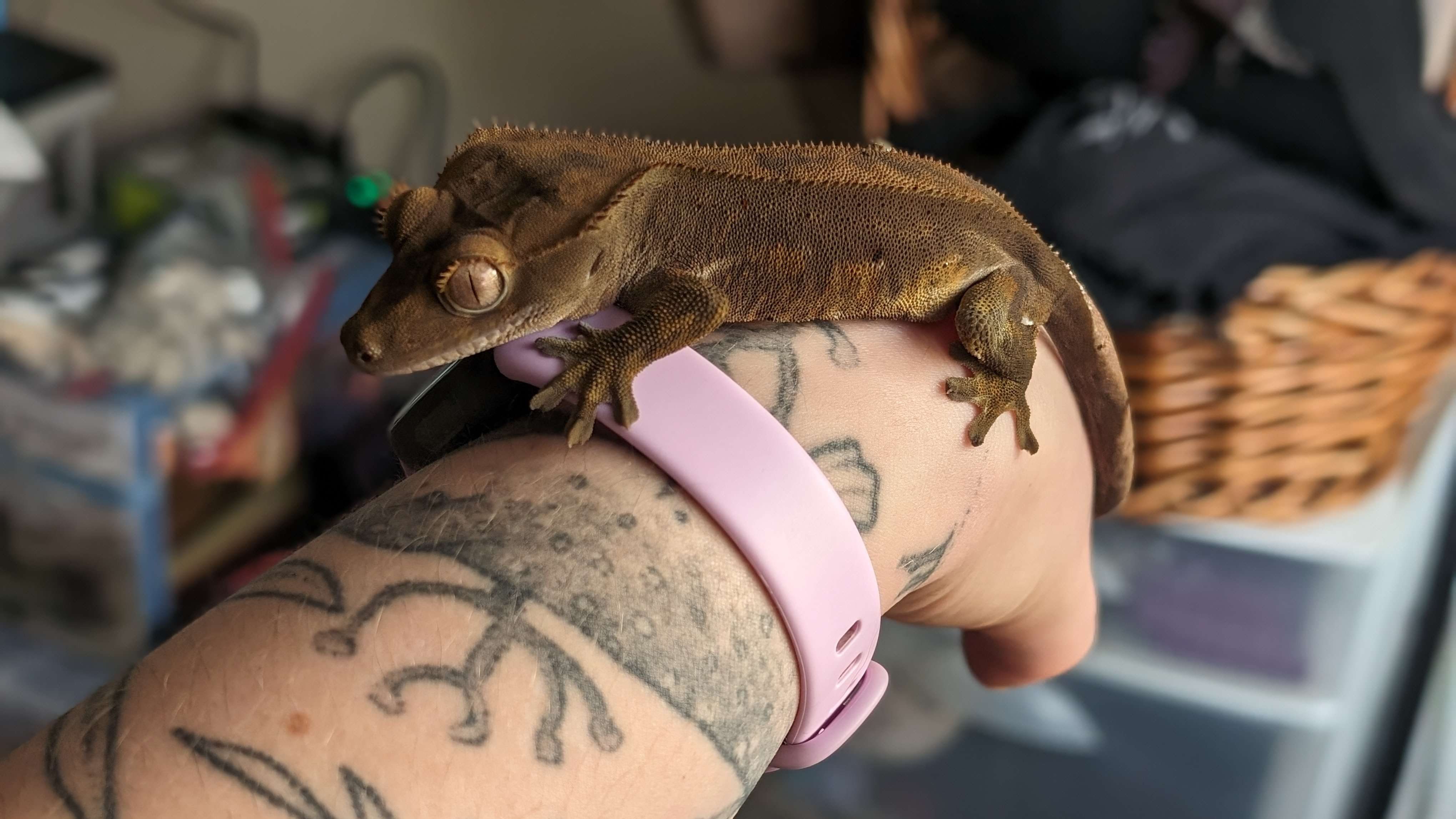
My gecko Renfield doesn’t have eyelids, but I know when he’s sleeping. I know where I have to put the mealworms so he’ll see them and eat them. I can tell when he’s done being held and wants to go back into his tank — a habitat I planted and seeded with microscopic insects to feed the plants and clean his waste, a little rainforest sitting in my living room where Renfield can be his very own Godzilla. I love this little lizard, and he trusts me.
My betta fish Indrid went from a tiny plastic cup to a ten gallon tank. Like a little black flash, he pops up to the front as soon as he sees someone walk into the room. Every morning, he waits in the same spot for his food. When I do water changes, he swims in circles around the top of the siphon. He flares when I press my finger against the glass, and patiently observes while I try and fail to establish live plants for him. I love this little fish, but I think he judges me harshly for my aquatic black thumb.
I don’t know if either of these animals is capable of love, but their personalities shine so brightly that I can’t say I care. Each pet has something to teach us, a lesson buried deep in its very bones. While the lessons dogs teach may be well learned, well researched, the lessons that the smaller things — the betta fish, the geckoes, the snakes — have to teach seem overlooked and strange. They’re harder to wrap your head around, but still — is it not beautiful to love the small things?
- Azad MB, Konya T, Maughan H, Guttman DS, Field CJ, Sears MR, Becker AB, Scott JA, Kozyrskyj AL. Infant gut microbiota and the hygiene hypothesis of allergic disease: impact of household pets and siblings on microbiota composition and diversity. Allergy Asthma Clin Immunol. 2013 Apr 22;9(1):15. doi: 10.1186/1710-1492-9-15. PMID: 23607879; PMCID: PMC3655107.
- Kates AE, Jarrett O, Skarlupka JH, Sethi A, Duster M, Watson L, Suen G, Poulsen K, Safdar N. Household Pet Ownership and the Microbial Diversity of the Human Gut Microbiota. Front Cell Infect Microbiol. 2020 Feb 28;10:73. doi: 10.3389/fcimb.2020.00073. PMID: 32185142; PMCID: PMC7058978.
- Gee NR, Rodriguez KE, Fine AH, Trammell JP. Dogs Supporting Human Health and Well-Being: A Biopsychosocial Approach. Front Vet Sci. 2021 Mar 30;8:630465. doi: 10.3389/fvets.2021.630465. PMID: 33860004; PMCID: PMC8042315.


Leave a comment