Four years ago, I trekked through dense pinyon-juniper forests on behalf of the United States Bureau of Land Management (BLM). We were trying to assess plant community recovery and fire management following three thinning techniques: mulching, controlled burns, and selective removal. They had no control plots, but this isn’t about their shoddy experimental design, or the many unassuming plants I became fond of while I was out there. Instead, it’s about one comment made by the BLM director in the area. I can’t remember it exactly, but allow me to paraphrase:
“People are upset that we’re cutting down trees, they think we’re destroying nature, but this isn’t how the pinyon juniper forest is supposed to look.”
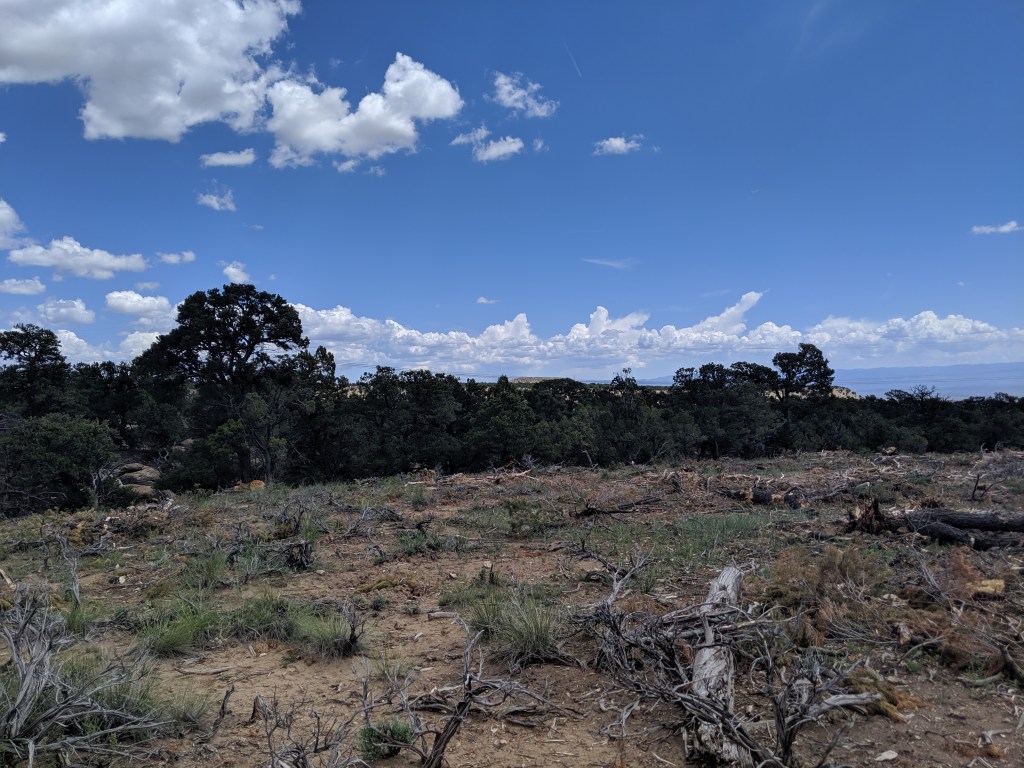
Which is to say, that the density of those trees I was navigating, those low lying pine branches scratching at my arms, should not have been there. They should be spaced out, spotty in the sandy soil. The places between should be full of sun-loving grasses and flowers, with plenty of space to run. Something more like a scrub savannah than the short, dense forest you saw below you when you looked over the edge of the mesas. The density led to disastrous violent fires, feeding on the tinder-dry pine needles and dead grass that swept away hundreds-of-years-old twisted pines that should have lived at least another five hundred.
I stood on top of piles of stunted logs and looked out over a desert landscape, and remembered the strict anti-fire campaign that began 1943 that squashed out every small fire for 80 years until the forest grew so thick that the entire American west burns for three months of the year and there’s nothing we can do to stop it. I also remembered the fires lit by the native american tribes of the Pacific Northwest, meant to scour the dry grasses and draw the salmon home in the fall. I remembered the controlled burns, the tradition of fire that existed for thousands of years before the inkling of setting sail across the ocean even crossed my ancestor’s minds. Those millions of souls, each with a torch in hand brought to the dry grasses of winter to prepare the land for a bright green summer. I try to imagine what the forest would have looked like a thousand years ago, before my ancestors arrived in the wake of a tsunami of disease and violence, and declared the American West untouched nature.
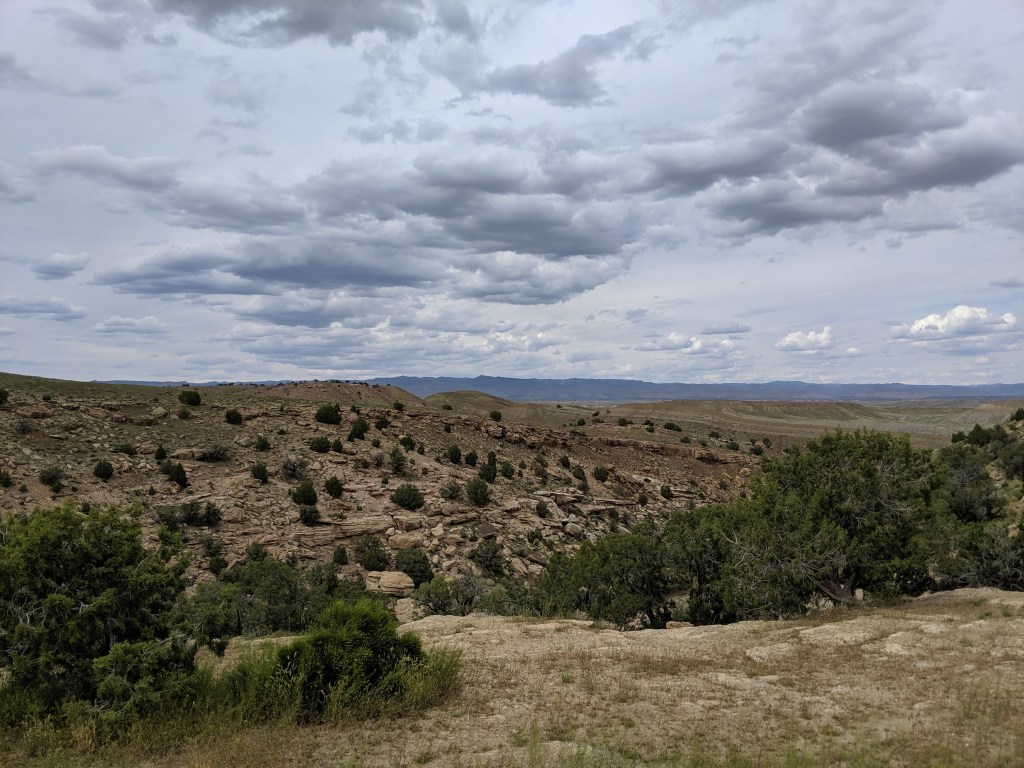
When our surveying ends early, our guide takes us down the side of the cliff face. I scramble over rocks. The canyon yawns below me, a raven winding on the wing. I can see its back. We pick our way over rockfalls, fill our canteens at a spring trickling through the stone above, until we find ourselves in the ruins of a village. There is still corn in the pantry. I feel like the inhabitants will be home soon, like we’re mere hours away from sitting around the fire and sharing a meal with them. Instead, our guide leads us to a metal box with a spiral notebook inside. I write my name in it. Icarus was here, atop the cliffs with their wax wings.
If my apartment complex is built on bones, if the sprawling plains are divvied up in neat little squares for miles around me, if the mountains burn until the sun turns red every august… is there a point to the seasoning shaker filled with native wildflower seeds in my pantry? Is there a reason to walk around at night and introduce myself to the toads and frogs after a thunderstorm? Why bother collecting the seeds of ponderosa pines?
Maybe I just want to hold hands with the people who loved this place before me. Who spent their nights singing to the ground, who built their homes in the sides of cliffs. Maybe I just want the eye of the sun to look upon me and say I tried. I loved. I am.


Leave a comment